
Your Bus Is Running Well. Where Is It Going?
I see this company all the time. It has good people, customers who are happy with the work, and revenue that's growing year over year. Everyone is busy, and from the outside there's very little that looks wrong.
Then I sit down with the leadership team and ask where the company is going. Many times the room gets quiet. Other times I get five different answers from five different leaders, and each of them is a little surprised to hear what the others said.
The way I describe it is a bus. The engine is running well, there are plenty of people on board, and everyone is doing their job. But the bus is driving around the block, over and over and over again. Or it's simply following everybody else, because that's where the business seems to be.
I definitely see this in growing markets. When business is good, it's easy to say, who cares where the bus is going? Business is good. And for a while, that works.
The question I'd ask you is whether all that effort is building the company you actually want, or just keeping the bus moving.
I was that CEO
I say this with a lot of empathy, because I've been there.
When I was running a company with nearly $30 million in revenue, I set a goal to grow it to $100 million. That seemed like a great goal to me, and I was genuinely excited about it. I fully expected my leadership team to be just as excited.
They weren't. I couldn't get them to join me in working out how we'd get there, and I couldn't figure out why.
Looking back, the reason is pretty simple. I couldn't describe what we were going toward. $100 million is a number. It sounds good, because we all know companies are supposed to grow and make money, but no one can picture what $100 million looks like. I couldn't either. A number doesn't make anyone feel anything, and it certainly doesn't make anyone want to sign up for the hard work it takes to get there.
What I'd given my team was how big I wanted the company to be. What I hadn't given them was a place they wanted to go.
What's your bucket-list trip?
When I'm in a room with CEOs and business owners, I'll often ask a few of them about their bucket-list trip, and I usually get very different answers for very different reasons. One wants to golf at St. Andrews in Scotland. Another wants a relaxing week on a beach somewhere warm. Someone else wants fresh powder in the mountains.
Then I ask them to describe it, and you can watch the whole conversation change. The skier starts talking about the crisp air and moving through the snow down the slope. The beach person describes the blue water and the sun, sitting in a chair with a book and something cold to drink. The golfer talks about playing those beautifully designed, historic greens.
And then I ask the next question, which is why. Why that place?
That's where the emotion comes in. The golfer tells me his father taught him to play, that he remembers a lot of wonderful weekends on the course with his dad, and that someday he wants to take his own son to St. Andrews. The destination has turned into something that matters to him, and everyone in the room can feel it.
That's what a true vision does for a company. I also describe it as the ending scene of a great movie, where something is finally achieved or realized, and we can almost see it. Visionary CEOs really do see it. When they think about where they want to take the company, it's like the movie is already playing in their head.
The hard part for many CEOs, and this was certainly true for me, is getting that movie out of our own head and into our team's. If we can describe the place, and the reason it's worth going, people want to come along. They wake up in the morning with a sense of purpose instead of waking up because they have to go to work and do their job. I would much rather have the first group, and I suspect you would too.
A long list of goals isn't a strategy
Once you know where you're going, the strategy is how you get there in a way that sets you apart. This is where I see a lot of CEOs get confused.
Many times when I ask a CEO about their strategy, they'll walk me through a long list of goals, initiatives, and things they want to accomplish. Those all matter. But a list of goals is simply goals, initiatives are projects, and the rest are tasks. Unless all of those activities combine to make your company truly different for the customers you serve best, you don't have a strategy yet. You have a busy calendar.
What I want for every CEO I work with is to become the only choice for their ideal customer. I mean that when those customers have the need your company fulfills best, they don't go shopping. They come to you, because they can't see anyone else who does what you do the way you do it.
The opposite of that is being a commodity, and I think a lot of CEOs know exactly what that feels like. It's the request for proposal that shows up and you know it went out to three, five, ten, maybe twenty other companies. The customer sees what you do as something they could get from anyone, so they're looking for the lowest price or the fastest delivery. That's a race to the bottom.
When a customer comes to you and only you, they're willing to pay a premium, because there's nothing to compare you against.
Heck yes, and a lot of heck no
A clear strategy also gives your team a filter. It tells them which opportunities deserve a heck yes, and it tells them that the majority of things, 80 or 90 percent of them, deserve a heck no. That includes some opportunities that would bring in revenue.
I know how hard that is. We work hard to win business, and turning work away can feel almost irresponsible. But anything that doesn't move us toward the company we're trying to build is pulling people, money, and attention away from the things that do.
Dan Sullivan and Dr. Benjamin Hardy explain this really well in 10x Is Easier Than 2x. The bolder the goal, the fewer ways there are to achieve it. A modest goal can be reached a hundred different ways, so it never forces you to choose. A big, hairy, audacious goal, to use Jim Collins' term, rules most of those paths out, which forces clarity about the one path that can actually get you there. Hardy takes it a step further in Time Is a Tool, written with Blake Erickson. When you put a game clock on the goal, the way a game clock works in sports, the urgency makes you commit to that path and say no to everything else.
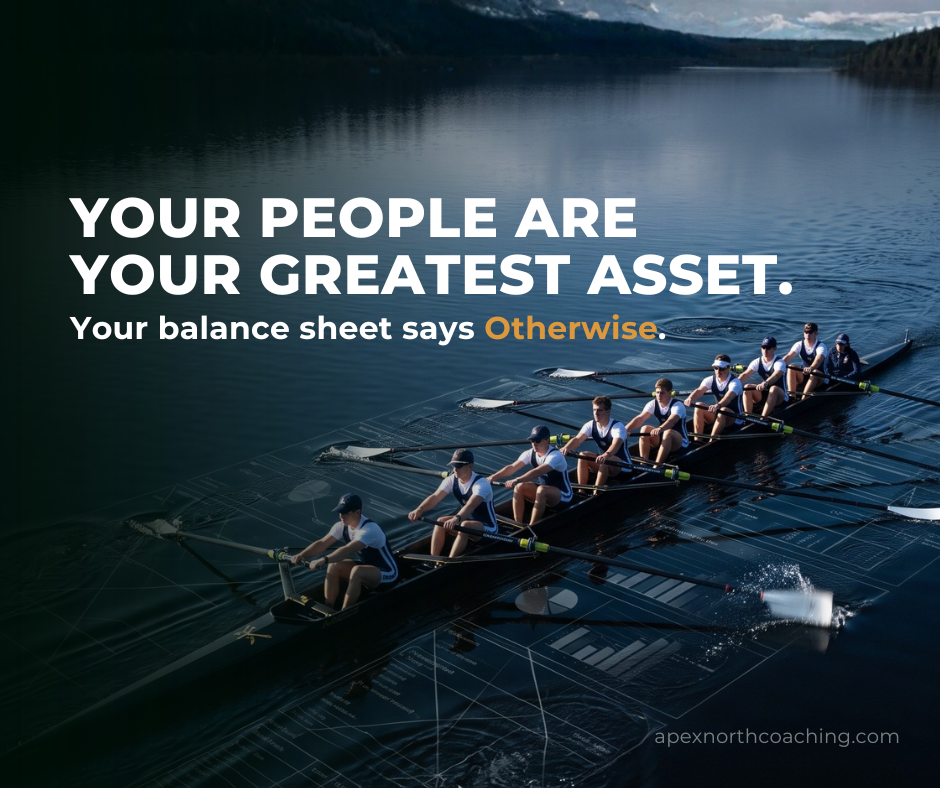
One of my favorite examples is the Great Britain men's rowing eight. They finished eighth at the 1996 Olympics in Atlanta. Over the next four years, every change they considered had to answer one question, which their crew member Ben Hunt-Davis made famous: will it make the boat go faster? If it did, they kept it. If it didn't, they changed it. In 2000, they won gold in Sydney.
I'd encourage you to ask that question about the next opportunity that lands on your desk.
Who built the plan?
There's another way a lack of clarity shows up, and it's one that's very hard to see from the CEO's chair.
I've worked with some very, very smart CEOs who develop the vision and the strategy on their own and then bring it to the leadership team to implement. You can hear it in the way they talk about it. My strategy. My vision. I created the plan.
The CEO should absolutely own the strategy. I believe that strongly. But the CEO shouldn't be the genius who creates it in a vacuum and then presents this beautiful plan to the team for adoption.
Here's what happens when they do. If I didn't help build the plan, I don't truly own it. I'm doing it because my boss told me to, and if it fails, well, it wasn't my fault. It was the CEO's idea. I'm going through the motions of my job, and there's a huge difference between that and someone who has real blood, sweat, and tears in the plan.
You also lose something. I truly believe that many strategies built in a vacuum get superficial buy-in, because the leadership team feels intimidated to criticize the plan or pick it apart. That's how you end up with groupthink, and it's how you lose the smart minds you hired in the first place.
Every leadership team should be full of smart people, and some of them should be smarter than the CEO. If that's uncomfortable to hear, it's worth a closer look. Some CEOs keep their teams out of the strategy because they want to be the smartest person in the room, or because they're a little intimidated. There's a difference between being smart and being a great leader, and the most capable people want to work for great leaders. It's one of the patterns behind what we call the CEO Doom Loop, and it's often why a CEO ends up with a team of capable doers instead of leaders. My podcast co-host John Ninkovich and I talked about this with Nate Austin of Mytech Partners on Escape the CEO Doom Loop. Every plateau his company broke through, someone outside the business had to point out first.
So build it with them. Let your leaders put their own DNA into the plan. When they share ownership of it, the accountability comes with it, both for executing it and for owning it when something falls short. We've written more about holding your team accountable to the vision once it's built.
A simple test
If you want to know where your company stands, here's a pretty easy test. Pull your leadership team together and ask each person to write down, without any discussion, what your strategy is in one word or one short phrase. Then read the answers out loud.
If you get different answers, you know you have work to do. Everyone could still be busy. The work might even be loosely related. But the bus is going around the block.
You can take the same question further into the company, too. Ask any employee where the company is going. If they can't answer quickly, or the answer changes from person to person, you've learned something important.
The next visible horizon
Going back to that bucket-list trip, if we're headed somewhere we've never been before, we need some idea of how we're going to get there. We won't see the whole route from the driveway, but we need to see the next stop along the way.
In the Apex North Star Way, powered by Metronomics, that next stop is the three-year highly achievable goal. We call it highly achievable because the leadership team uses time as a tool to make sure they get there, rather than stating a goal and hoping. Working backward from it, they set the strategic initiatives that move the company toward being the only choice, and they say no to the work that doesn't.
"I've got the steering wheel, but where are we going?"
Our client Streeter builds luxury custom homes here in Minnesota. It's a family business that's been around since 1985. When I started working with them, CEO Bill Costello and his business partner had just been handed the company to run. Bill described that moment this way at a Metronomics event: "I've got the steering wheel, but where are we going? I have no idea."
Streeter wasn't struggling. They built great homes and had a strong reputation. But in Bill's words, "Our business had been successful, I like to say accidentally. Like without strategy or purpose, we just put our nose down. We built great homes, but there was no sort of longer term vision." They wanted that vision "in order to guide everything else we wanted to do."
That's the bus running well and going around the block. Over the next three years, Bill and his team built the vision and strategy together. Today, when Bill talks about his people, he says they're doing the work on their own because "they see the vision. They believe in the vision."
As you look at next year
Before the planning season gets away from you, I'd ask yourself a few questions.
Can I describe where we're going so clearly that my team can almost see it, and do they understand why it's worth the trip?
Does our strategy make us the only choice for our best customers, or one of many?
Did my leadership team help build this plan, or am I about to hand it to them?
If you want to go further, The CEO Playbook came out of our interviews with 72 CEOs about why capable leaders get stuck as their companies grow. It's a short read, and a good one to have on hand before your planning session.
Your bus may be running beautifully. My challenge to you is to make sure it's going somewhere worth going, and that everyone on board knows why. And when someone wants off at the next stop because this isn't the trip they signed up for, help them off with respect. The people who stay will be the ones who want to get there with you.
If you'd like a second set of eyes on where your bus is headed, let's talk at glendall@apexnorthcoaching.com.
FAQ
What is strategic clarity? It means your leadership team knows where the company is going, how you'll win there, and what you'll say no to along the way. A company can be busy and growing without it.
Why isn't a revenue goal a vision? A revenue goal tells people how big you want the company to be. It doesn't give them a place they want to go. Nobody can picture what $100 million looks like, so it doesn't make anyone want to sign up for the work.
What is the difference between strategy and goals? Goals are goals, initiatives are projects, and the rest are tasks. Strategy is what they add up to: a company that's truly different for the customers it serves best, so it becomes the only choice instead of one of many.
How can a CEO tell if the leadership team is aligned on strategy? Ask each leader to write the strategy in one word or one short phrase, without any discussion, then read the answers out loud. If you get different answers, the team isn't aligned, however busy everyone is.
Should the CEO create the strategy alone? The CEO should own the strategy, but build it with the leadership team. When leaders help create the plan, they own the results. When it's handed to them, buy-in is often only on the surface.
What is a three-year highly achievable goal? In the Apex North Star Way, powered by Metronomics, it's the next visible stop on the way to a long-term vision. The leadership team uses time as a tool to reach it and sets the strategic initiatives that move the company toward being the only choice.


Comments